


As International Day of the Midwife honours our hardworking maternity staff, Catherine Lewis looks at what is being done to improve conditions for these essential staff.
The NSW Government announced a landmark pay increase for nurses and midwives of between 16 and 29% on 16 April. The Industrial Relations Commission’s decision means a reset increase of between 10 and 22% will be backdated to July 2025. This will be followed by a 3% increase from July 2026 and a further 3% from July 2027.
This is their largest pay increase in more than two decades and comes as International Day of the Midwife on 5 May celebrates the vital role that almost 7,000 midwives play in communities. However, a new report warns of a sector ‘in crisis,’ as staff levels plummet.
Post pandemic, births saw a record spike to 315,000, yet midwife numbers have fallen by more than 1,220, says NSW Health, with the National Skills Commission warning of shortages in every state and territory. NSW now has the lowest number of midwives per capita in the country, says the new Midwifery Futures Report, with only 104 per 100,000 population, with pressure, pay, trauma and workload the culprits.
Registered Midwife in private practice Alexandra Tolley, who works across the Lower North Shore and beyond, tells NL that, despite sector challenges, her work remains ‘amazing and so fulfilling.’ “Private midwives are highly skilled clinicians whose work is guided by evidence-based practice, country-specific codes of conduct and clinical guidelines – we are there to keep women and families safe in every aspect,” Alexandra says.
“In private midwifery practice we work primarily for the woman and our main allegiance is not to a hospital or health district, so we witness real, lasting change in terms of more positive maternal and child bonding and higher instances of breastfeeding lasting 12 months and beyond. Seeing those positive outcomes is amazing and the worth of your work is highlighted by clients returning,” she adds.
But despite many who are deeply committed to their work, the Futures report warns that more than a third of midwives feel forced to consider walking away due to poor working conditions. It makes over 30 ‘essential and urgent’ recommendations to boost the flagging sector, including increased visibility, governance and leadership, improved workforce planning and growing worker numbers.
Enter the 2026 ICM theme, ‘One Million More Midwives,’ a ‘shared demand, driven by the realities midwives and women face,’ says the International Confederation of Midwives (ICM).
“Without urgent investment in midwifery education, employment, regulation and leadership, countries will continue to face severe shortages. One million midwives is the estimated workforce needed globally to meet essential health needs and gaps translate directly into poorer outcomes for women, newborns, and families.
“The solution is clear. When midwives are educated to international standards, properly regulated, fairly paid, and integrated into health systems, outcomes improve. Investing in midwives is not only the right thing to do; it is one of the smartest investments a health system can make,” the ICM states.
The NSW Nurses and Midwives’ Association has long been calling for urgent sector investment. The 2024 NSW Parliamentary Birth Trauma Inquiry revealed that one in 10 NSW women – 95% of whom give birth in hospitals or birth centres, with 79% as public patients – have suffered preventable birth trauma and midwives, emotionally invested at the highest peaks and lowest valleys, often suffer secondary traumatic stress.
The association reports that 15 of every 100 nurses and midwives feel high stress levels akin to PTSD, especially in light of NSW Health data showing that caesareans have risen by 10% since 2004.
While welcoming the ‘historic’ April pay deal for midvives, the association said it ‘fell short’ of what was needed to repair the state’s public health system.
“The announcement gives a record breaking pay deal for nurses and midwives in NSW,” Mr Whaites said. “Yet for registered nurses and midwives it is not enough to fix the structural reform that we need in this state.”
Mr Whaites tells NL that across NSW, midwives are experiencing ‘chronic’ workload issues because of staffing shortages.
“Understaffing, coupled with low pay, is leading to midwives including senior, highly skilled ones, reducing hours or leaving the profession.
“At facilities in northern Sydney, the physical and emotional toll of being overworked and not getting proper breaks on shifts leads to burnout and fatigue (and resignations).
“We welcome the State Government’s recent announcement of the inaugural chief midwife and safe staffing ratios in seven dedicated postnatal maternity wards. We will push for all maternity wards to have these critical reforms, including Northern Beaches Hospital (NBH) and Royal North Shore (RNSH) hospital. This will lead to better outcomes for women and babies, and ensure midwives are delivering quality care in a safe working environment,” adds Mr Whaites.
Private midwife Alexandra Tolley agrees the work environment needs to change. “While the hospital system is wonderful, it is crippled by poor staffing. There are also rising rates of unwarranted interventions – policies which are not evidence based. We need those things addressed, but primarily we need to bring back out-of-hospital birth centres and publicly funded homebirth programs.
“Women deserve the care of a known skilled midwife through pregnancy, labour and birth. A teacher of mine said, ‘The hand that rocks the cradle rules the world,’ and if that hand and the mother attached to it is given great support, it is the best preventative care for lifelong health and wellbeing.”
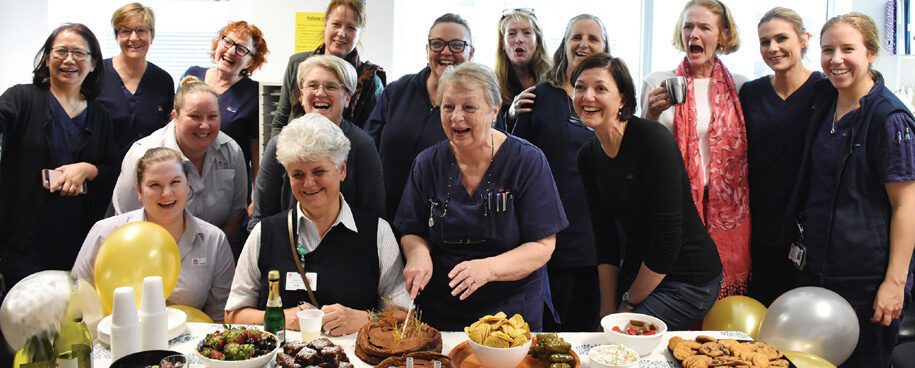
Retired RNSH midwife Megan Donnelly delivered hundreds of babies over 50 years
“Across NSW, midwives are experiencing chronic workload issues because of staffing shortages.”
Michael Whaites, NSW Nurses and Midwives’ Association
Encouraging a long career is key to the sector’s sustainable future and, with many students leaving due to placement poverty, poor culture or a lack of training support, retention needs to be the focus. NSW public hospitals and health services are set to welcome over 3,200 new graduate nurses and midwives this year, who will welcome the pay increase.
The National Maternity Workforce Strategy 2026–2036 aims to strengthen Australia’s maternity workforce via recruitment, retention, and culturally safety. One-on-one intensive ‘protected learning time’ for the first year of practice has already been green-lighted.
Other plans include greater investment in mental health support and postpartum services, as well as increased funding for psychological support for those experiencing miscarriages.
“Midwifery in Australia has seen some important developments over the last 12 months,” says Australian College of Midwives President, Zoe Bradfield. “Midwives working to full scope of practice has been recognised through the Unleashing the Potential of our Health Workforce review and primary maternity care is being prioritised.”
A true proponent for lifelong wellbeing is retired RNSH midwife Megan Donnelly, who delivered hundreds of babies across more than 50 years. She spent a decade as a nurse before finding her love for women’s health.
“I was home when I joined the midwifery team and I never looked back,” she says. “It was an honour to serve my community – it has just been an absolute joy. I’ve had the pleasure of meeting people who I helped deliver 37 years ago, some of whom are now having their own babies. I loved every minute, and I wouldn’t change a thing,” she adds.
Additional reporting by NL.