


Infertility affects one in six Australian couples of reproductive age. So what are the facts behind the figures? And what can be done to help? Catherine Lewis reports.
For some, the journey to motherhood begins with a positive pregnancy test. For others, it begins with months of waiting, wondering and disappointment. Defined by the World Health Organisation as the ‘inability to conceive a pregnancy’ after 12 months of regular unprotected sex, infertility is one of the ultimate emotional and physical strains. Yet difficulties are common, striking one in six Australian couples trying to conceive, says Health Direct.
The causes are varied, with 40% attributed to female reproductive challenges, 40% to male and 20% to a combination, or undetermined. For women, age, endometriosis, damaged fallopian tubes, fibroids or polyendocrine metabolic ovarian syndrome (PMOS) are often to blame. For men, it’s low sperm count, poor sperm movement or shape, testicular torsion or ejaculation disorders. Lifestyle factors such as illegal drugs or being overweight can also play a part.
Polycystic ovarian syndrome (PCOS) was recently officially renamed PMOS to reflect the growing understanding that it is a complex hormonal and metabolic condition, not simply an ovarian cyst problem. It affects one in eight women in Australia, mostly those aged 34 to 44, says the Women’s Health and Equality Information Hub. While early detection is key to improving long-term health and fertility outcomes, diagnosis is often delayed, with many only discovering when trying unsuccessfully to conceive.


“Be proactive about your fertility.”
Sarah, mother of two and PMOS sufferer
North Shore-based Sarah was diagnosed at 21 and told that she would likely need In vitro fertilisation (IVF) – a fertility treatment involving handling eggs and sperm outside the body – to conceive. “More than the irregular periods, there was the pain and unpredictability of ovarian cysts rupturing,” Sarah tells
NL.
Fast-forward seven years and Sarah was experiencing difficulties. “I always hoped that we would be able to conceive naturally, though my infrequent periods meant I was not ovulating regularly,” she says. “By the time I was 28, in consultation with my GP, we decided to seek specialist help.”
She and husband Nicholas went to see fertility specialist Dr Robert Lahoud at IVF Australia in 2020, initially beginning unsuccessful ovulation induction – a first-line medication treatment to stimulate ovulation. “I had my first egg collection in 2021 and my first embryo transfer resulted in my daughter,” Sarah says. “When she was 15 months old, we decided to try again, and our fourth embryo transfer led to our son in 2025.” Medical consensus is that women under 35 should seek medical help after a year of trying to conceive, and six months for those over 35. Those with known fertility concerns should consider visiting their GP earlier.
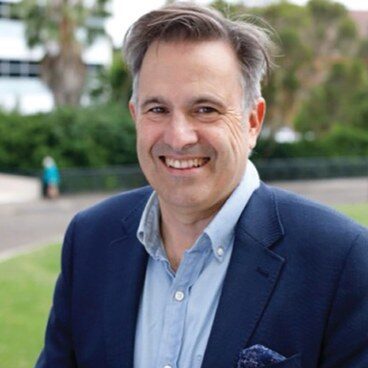
“The fertility outlook for women with PMOS is generally very positive.”
Dr Robert Lahoud, IVF Australia
“Be proactive about your fertility,” Sarah says. “I understand the temptation to live in hope, but where there is a suspected or known issue, seek help sooner rather than later.”
Dr Lahoud tells NL that PMOS impacts natural conception due to regularity of menstrual cycles, age, weight and overall health. “The good news is that treatments to restore or induce ovulation are often very effective and the fertility outlook for women with PMOS is generally very positive,” Dr Lahoud says.
Each year, one in 18 children – around 20,000 – is born due to IVF in Australia, says the Australian and New Zealand Assisted Reproduction Database (ANZARD), rising to one in 10 to mothers aged 35 plus. A rise in genetic testing and egg freezing alongside maternal age increases – the median age of birthing mothers has jumped from 25.4 in 1971 to 31.9 in 2022, says the University of NSW’s National Perinatal Epidemiology and Statistics Unit (NPESU) – are set to send IVF tallies soaring over the coming decade.
Single women and same-sex couples account for one in five cycles. “IVF is not just for treating infertility in heterosexual couples,” says NPESU Director Georgina Chambers. The number of IVF cycles by single women surged from nearly 9,500 in 2020 to 15,994 in 2023, while 3,648 IVF cycles in 2020 were by female same-sex couples, increasing to 4,777 in 2023.
With one IVF cycle using fresh eggs costing between $9,500 to $13,000 before Medicare rebates, says CompareIVF.com, IVF is a big decision. ANZARD reports that live birth rates per cycle range from 38% for those under 30, to just 3% for women aged 43-plus.
Last year, a 10-year government fertility review recommended that same-sex couples, single women and low-income families have cheaper access to treatment. Merging over 40 state-specific IVF-related laws into one national law, enabling a single national health standard for egg and sperm donation, was floated as well.
Also surging is fertility preservation – the freezing of eggs or embryos for future use, costing between $8,000 to $12,000 per cycle, plus annual storage fees. In 2023, cycles rose to 9,000, up 28% from the previous year and more than twice the 2020 total, says ANZARD. Typically, the process involves gonadotropin injections, followed by egg collection before eggs are frozen in liquid nitrogen and stored.
Cancer patients accounted for 712 cycles, but the biggest leap was planned egg freezing, due to safeguarding future fertility and advances in pre-implantation genetic testing.
Australia’s first independent egg-freezing calculator now offers evidence-based advice about conception chances. Developed by NPESU and funded by the Federal Government, YourIVFSuccess website’s YourEggFreezeEstimator uses real-world data from the national IVF registry. The calculator attracts 25,000 visits a month, with traffic growth of 400% between 2024 and 2025.
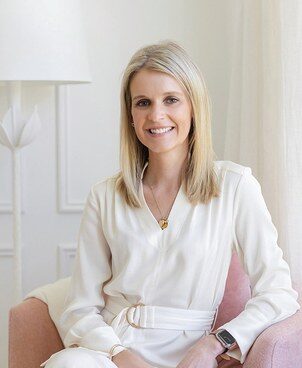

Dr Michela Sorensen, Elme Health founder
Northern-Beaches based GP Dr Michela Sorensen tells NL that the ‘main reason women come to me wanting to freeze eggs’ is to ‘keep fertility options open.’ “They may find themselves single in their 30s and unsure about their future, or even uncertain if they want children, but want the choice,” Michela says. “Women are trying to conceive later due to career or finances, so they want to ensure they don’t miss the boat.”
Michela – founder of digital medical concierge, Elme Health, offering health mapping and biomarker testing – says that early conversations around fertility are ‘definitely key to success.’ “Early 30s is the time I commonly have the conversation as egg quality and quantity drop quite significantly after 37, so having the process started prior to this is ideal,” Michela says.
As frozen egg cycles surge, fertility clinics are struggling to keep up with freezer storage demands. One of the country’s largest IVF groups, Genea Fertility, is eyeing expansion as patient numbers rocket – between 2013 and 2023, Genea had 38 times more patients and 34 times more oocytes (developing eggs) in storage. The length of time eggs and embryos can be stored varies across states, but on average, it is around 10 to 15 years. “We are much more accepting of women freezing eggs and the stigma has largely gone,” says Michela. “The view has moved to a positive one, one of women being proactive about their health – and this is supported by many workplaces, which is great to see.”


