


Registering as an organ donor takes only minutes, but could save someone’s life. In honour of DonateLife Week this August, Aoife Moynihan talks to donor families and a donations specialist nurse who matches donors with recipients.
About 50% of people on the Northern Beaches are registered organ donors. If you are one of the other 50%, DonateLife Week, World Organ Donation Day and Jersey Day make August an ideal time to register, tell your family and you could save countless lives.
Manly residents Brad Van Dijk and Karrie Rose lost their son Tom Van Dijk suddenly in 2021, as he approached his 18th birthday and was in Year 12. Brad tells PL that he misses Tom ‘beyond comprehension.’
“He was a very special young man,” says Brad. “He was well-rounded and lived each day with kindness, humility and purpose, and was mature beyond his years. Tom was my hero and I aspired to be like my son.”
Tom was happy and in love, a talented musician who played violin and guitar, and had great mates with whom he loved hanging out with at Jerusalem Bay and Camp Cove. A top student at St Pius X College in Chatswood, he had received many awards for academic achievement, sport and music along with The Character Strength Award. He planned on studying medicine, not for prestige but because his life’s career ambition when asked was simply ‘to help others.’
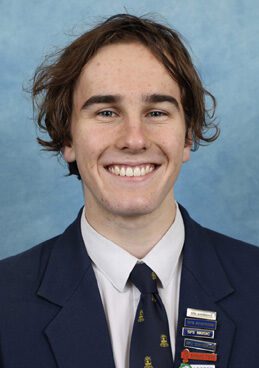
Tom was a top student at St Pius X in Chatswood
He had worked hard at Bunnings since age 15 and with money he had saved, together with contributions from family and the community, his family established a scholarship in his name at St Pius. His kindness, humility and quiet strength continue to inspire all who knew him.
Tom was also a great sportsman. “He had an incredible swimming record,” says Brad. “Oddly, he passed away following a swim with us. Something went wrong with his heart and he couldn’t be revived and died of natural causes.
“I can’t begin to tell you the trauma it caused in our lives.”
Tom had told his family over dinner a few years earlier that he wanted to be an organ donor. “Tom had just gotten his driver’s license and he brought this brochure on organ donation to the table,” recalls Brad.
Back then, you could register with your NSW driver’s license; now you need to register with DonateLife.
“I remember that conversation well. Tom said, ‘that’s something I want to do,’” says Brad. “We had to make that decision on his behalf at the hospital that night. We knew in our hearts it was what Tom wanted, to help people. He ended up helping and saving the lives of seven people and becoming the person he wanted to be in this life,” Brad says.
Donation details are kept private, but the donor’s family can write to the recipient anonymously. “I’ve written letters about who Tom was to (the recipients), I’ve only heard back from one, but that’s okay. I just wanted them to know who he was. I want his memory to be cherished and to live on,” says Brad.
According to DonateLife, only about 2% of people who die in Australian hospitals can be considered for organ donation. In 2025, about 1,500 families were approached about organ donation – 790 consented, of which 557 became donors.
In NSW, there were 160 deceased organ donors, 411 transplant recipients, 82 living donors (for example, donating a kidney) and 34,156 new registrations.
Donation specialist nurse Jenny Holman, based at Royal North Shore Hospital (RNSH), has been matching donors with recipient for 20 years, coordinating all hospitals in the Northern Sydney Local Health District.
“For organ donation to be possible, a person generally needs to be receiving care in hospital, often in intensive care with the support of a ventilator, as the organs need to remain healthy for transplantation,” Jenny explains. “Tissue donation, including eye donation, can often take place after a person has died in a range of settings, including residential aged care, palliative care or at home, with up to 24 hours for donation to occur.”
Jenny says she is often contacted by intensive care teams when someone is approaching the end of life. “The team may ask me to meet with the family and provide information about organ and tissue donation, so they can consider whether it aligns with their loved one’s wishes and values.”
Jenny and her colleagues receive extensive training to support families with care, sensitivity and respect. Discussions about donation are approached as part of holistic end-of-life care, with the person and their loved ones at the centre of every conversation.
“We explore any spiritual, religious or cultural considerations, and discuss meaningful ways families may wish to honour and remember their loved one. Organ and tissue donation is one of the options we talk about as part of compassionate, person-centred end-of-life care.”
Jenny says many people are surprised to learn that having a medical condition or being older does not automatically rule out donation.
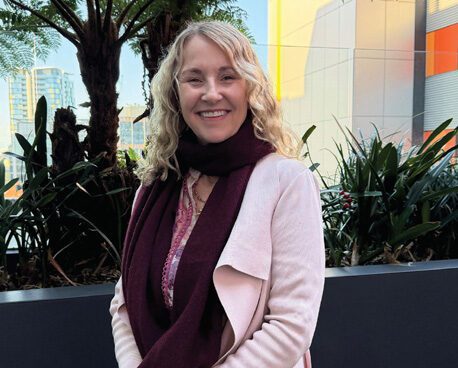
Jenny Holman, donation specialist nurse
“My role is never to persuade families to say yes to donation. My role is to provide clear information, answer questions and support families to make a decision that feels right and honours their loved one’s wishes.”
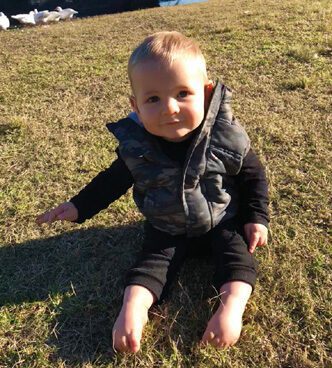
Elanora Heights couple Edwina and Anthony Symonds lost their precious ten-month baby boy Sebastian (Sebby) in 2018.
“He was a beautiful thriving bub,” Edwina tells PL. “Then at about six months he had an bad seizure and ended up in Randwick Sydney Children’s Hospital.”
Sebby recovered well but a few weeks later he had another seizure and was diagnosed with a rare form of epilepsy. Tragically, Sebby didn’t recover after a further seizure about ten weeks later.
“They told us he was brain dead,” recalls Edwina. “We just said, ‘You have to do something. Something good has to come of this. Can we donate his organs?’ It was a pretty immediate decision.”
Edwina and Anthony were able to donate Sebby’s kidneys.
“There is nothing good about what happened to us,” says Edwina. “But we are eternally proud of Sebby’s short life because someone else lives because of him.”
Edwina says it’s important to tell your friends and family that you want to be an organ donor.
“Signing up only takes a minute, but its literally telling your friends and family that that’s what you want in case it ever happens,” says Edwina.
Edwina and Anthony keep Sebby’s memory alive with their other two children, who are five and seven years old. They say goodnight to Sebby every night and shooting stars now have extra meaning for the family.
“We don’t see it special that he died, we see it special that he lived,” says Edwina. “And this is the most incredible thing that he did with his short life.”
Explore organ donation
• DonateLife Week, 27 July to 2 August
• World Organ Donation Day, 13 August
• Jersey day, 4 September
Wear your favourite jersey. Begin a conversation about organ donation