


Clubs are busy upgrading suburban landscapes, diversifying their income stream as they look to the future needs of their communities. Editor in Chief Michelle Giglio reports
Doyalson is a relatively small Central Coast town on the Pacific Motorway, one which you could easily bypass on your way to Lake Macquarie or Coffs Harbour. In the next few years, a mini-city will be built that will give you every reason to stop and spend a few hours – and it’s the sort of place you could spend your whole life without leaving.
Doylo Lifestyle Group (DLG), which runs the Doyalson Wyee RSL, is constructing a $540 million development next to its existing club with 800 houses, including seniors living, a hotel, child care centre and medical centre. It’s what chief executive officer Brett Elliss calls a ‘cradle to grave’ build, possibly the biggest planned for the Central Coast right now. And most importantly, with a projected future value of $750 million, it will position the business for decades to come.
To be known as The Australian Resort, Brett says the mixed-use development will see land used for different purposes, but with ‘complementary and synergistic value’. “We’ve designed something that’s almost cradle to grave in the sense that we’ll have everything from childcare through to retirement living on the site.”
Brett, who took over as CEO of DLG in June, has been working on this project for 10 years as chief commercial officer, a total of 21 years with the group.
The resort has been carefully thought out and underlined by extensive market research, Brett says. The process began back in 2017 when DLG started thinking about how to make sure the business was sustainable – but also what was needed in the growing Central Coast community.
“The masterplan was built around a number of objectives,” Brett says. “But it was largely to be sustainable into the future, beyond the reliance on traditional forms of revenue in terms of gaming, beverage and food.
“It stems back to that need of having to reinvent ourselves and not just stick with what traditionally has worked for us in the past, knowing that that will change in the future. Diversification’s extremely important.”
The diversification will mean DLG’s gaming profits will shift from 75% to 15%. “So gaming in the future becomes something that’s really minimal or almost to the point where it’s immaterial to our business. And that’s really important for us because we want to be prosperous and sustainable without the reliance on gaming.”
Changing needs of communities
DLG is one of many clubs in NSW which have decided to diversify their business in the last few years – though few would have as much land or space to enable such an extensive project. One thing is clear: clubs are moving away from the traditional reliance on poker machine profit, not only to diversify income, but also in response to the changing needs and demands of their communities.
When Cabra-Vale Diggers was started over 100 years ago by 20 returned servicemen, they initially used an old army hut for their get-togethers. In 2025, the Diggers celebrated its centenary by unveiling a $230 million transformation as Cabravale Club Resort, complete with a 140-room hotel and pool, event and conference centre, and revitalised gaming area.
Gone is the old, outdated clubhouse with one restaurant. In its place have opened an array of dining options, including the award-winning District 8 street-food hawker lane, fine-dining restaurant Magma, and Lotus Bar for night-time hijinks.
The club has almost doubled its original footprint to 33,000msq, which takes up a block of land opposite the Liverpool railway line.
Cabravale Resort was the result of an eight-year plan by the board to diversify revenue, chief operating officer Vicki Le told me on a recent walkabout of the club. “Back at that time they were talking about constructing Western Sydney International Airport,” Vicki explains. “So we could see the demand for tourism coming in, and that’s how the concept of a hotel came in place.”
For Fairfield Council, a development to the scale of Cabravale was vital as it fulfilled one of the objectives of the Greater Sydney Commission for urban renewal of the LGA which provides more local employment.
The club has doubled its workforce to 249 full time equivalent, but it can also now offer more high-level – and higher paying – jobs, Vicki says. “One of the things that we are most proud about (with the new club) is employment. Because contributing to local employment is one of the crucial factors of why we exist.
“Cabramatta itself is a fast-growing area in South West Sydney. The community here is so vibrant with a lot of skilled migrants, which is great and we want to keep that within the local community.
“Back in the day, for high level jobs, locals had to go to the city or Parramatta. And now it’s right here. So it’s amazing how someone could wake up and think, ‘Oh, I want to work for Cabravale when I graduate.’”
It also benefits the local economy, Vicki points out. “Once you open a hotel, obviously other parts of society will benefit as well. Uber drivers, taxis, local takeaway shops, and even theme parks and Western Sydney Zoo.
“So everyone is benefiting from having an entertainment destination in Canley Vale.”
Cabravale has been one of the top five clubs by gaming revenue in NSW since last November, with around 90% reliance on poker machines in the past. Vicki says that is now down to 60%, with potential to be further lowered in the next two years, with stages 2 and 3 of the development yet to be completed. That will see more dining options open, and a renovation of community rooms. “It’s a big achievement. And I think it’s going to be better in the future because look at what we are building here.”
“Everyone benefits from having an entertainment destination in Canley Vale.”
Vicki Le, Cabravale Resort
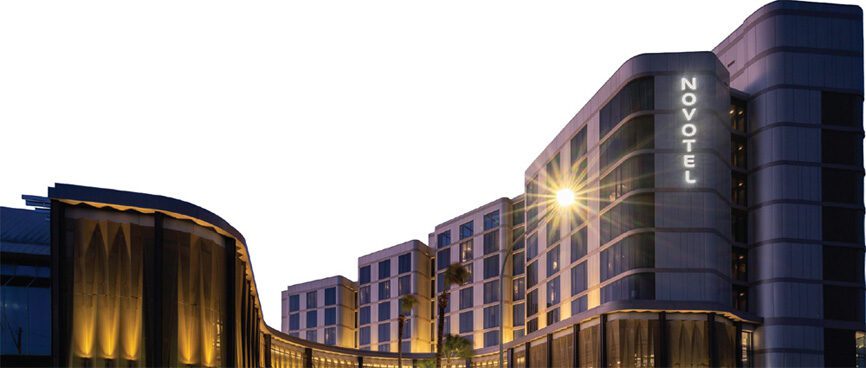
Cabravale Resort, complete with a Novotel, opened last year
Access to land is key to expansion
Access to land is key to the ability of clubs to expand. Doyalson CEO Brett Elliss acknowledges that smart decisions by DLG executives in the past meant it had accumulated a lot of property surrounding the clubhouse over a 20-year period. The Australian Resort will span 50 hectares and completely reshape the existing landscape, much of which is Greenfield. “The ability of having land and holding onto land that was purchased a long time ago at a much lower price than what its current market value is, puts us in a good position to not have that cost of development in the future,” Brett reflects.
DLG will sell most of the 150 standard residential properties in Stage 1 of the build, to help fund future stages over the 10-year plan. Brett calls this ‘capital recycling,’ and DLG will retain ownership of most of the businesses which will be part of the resort, like the wellness centre, petrol station and medical centre.
And it is creating a land lease community of almost 400 homes, often used for the over-55s, where the buyer owns the home, but leases the land from the property owner.
“The idea was that people could live on site, they could enjoy the amenities through those other land uses, and they could stay on site and move through those different stages of life moving into different care facilities or housing,” Brett explains.
A green build to foster self-reliance has also been a priority, Brett says, with water harvesting, solar energy and battery energy storage solutions all prominent in the plans. And instead of overdeveloping the site, DLG has taken a sustainable approach. “The theme is to create this oasis that reflects The Australian Resort. And a lot of that’s tied back to retaining a lot of the natural endemic species.”
With some rezoning and land parcel subdivision approved, DLG is well on its way to hopefully start infrastructure works next year, with a view to commencing the residential build in 2028. It has not been without its hitches. Brett admits there are still ‘lots of hurdles’ to get through with development consents.
“But it’s extremely exciting and our workforce will grow dramatically, creating over 1,310 jobs,” which Brett considers ‘extremely important’ to enable employment for locals near where they live.
The size and scale of The Australian Resort is a far cry from how most people view RSLs – as a place where they can get a good meal, see a show, play pokies and watch the footy.
“We want to think differently to a lot of other clubs,” states Brett. “We look at ourselves as more of an investment company. So we’re focused on developing our land and our site (in a way) that’s going to have the biggest impact and the best value for the surrounding community. But which also enables us to be sustainable in our own business into the future.”
Working with councils is key to approval of DAs
Working closely with a local council is key to approval of such dynamic DAs – and the climate is ripe in Sydney with the State Government drive for housing density and economic stimulation of areas in need of change.
Ryde-Eastwood Leagues Club started working with Ryde Council on a masterplan for the West Ryde area nearly four years ago when it realised that existing development control plans would not enable it to grow upwards, which was essential to realise good opportunities in a land-locked suburban area.
The board decided to work on the planning themselves as council was not ready, but continued to consult council, club CEO Carl Pozzato explains. The proposal would see three sites developed including a combined 21 storeys of residential towers, a medical facility, six-storey hotel, café precinct with plaza and outdoor community spaces. When the proposal went to a vote at council in June this year, it ‘went straight through without discussion’ because the club had addressed all the concerns, Carl says.
“The outcome was probably more beneficial because everything aligned.” There was also extensive community consultation, including with over 46,000 members, which backed the proposed building heights, and discussions with the NSW Department of Planning. “The aim was to focus on delivering what the community wanted, as opposed to coming up with an idea that wasn’t aligned with what they wanted.

Ryde-Eastwood’s proposed masterplan goes over several blocks of land and will completely redesign the existing club, seen below

“From a board level, our strategic plan is diversifying our revenue away from club, so it’s not just gaming.”
Carl Pozzato, Ryde-Eastwood
“So a lot of the groundwork’s been done early, so hopefully the next step should be easy when it goes to Gateway.”
If passed at Gateway there will be another exhibition of the plan with potential sign off by mid-next year. This will involve further community consulation.
The club’s ability to offer housing has been directly because of the shift in government policy, Carl states. “Housing wasn’t originally part of our vision and masterplan three years ago. It was only (put in) as a key need for the community when the State Government really put that push onto housing.”
And once council had approved three towers near the club, which backs onto the railway, a key area for increased housing identified by the government, Carl says it supported the proposed height of its development.
“So that’s why we shifted to 12 storeys and looked at the opportunity for housing because of demand in the area.” Ryde-Eastwood will continue to own most of the housing, and lease it out through build-to-rent, which is part of the diversification strategy, Carl says. “The club’s always had housing as part of what it does for 39 years. So we’ve always diversified away from other club operations. We currently have knocked down 10 houses because we’re about to build a seniors’ village with 87 apartments. So it was in line with what we already do.”
Carl expects the turnover from the $100 million seniors village to help fund the masterplan, but further financial modelling can only be determined once the club knows whether the residential tower heights and other elements of the proposal are approved. “Those commercial leases that we currently do now, and we’ll continue to do in parts of that area, will be key.”
It was council’s idea to include units in two of the sites in the development, which would help build on what is already being planned around the railway site, Carl explains. “It does the work for them and sets a strategy to address the housing shortage, especially along that commercial side of Rydale Road,” Carl adds.
Site 1 which redevelops the current club and adds a pedestrian plaza with food and retail open to the public, and nine storeys of build-to-lease units, is costed around $300 million. The sites are proposed to be built over 10 to 13 years.
I ask Carl why Ryde-Eastwood and other clubs are going down this path. “(Clubs) talk about diversifying their revenue away from gaming. From a board level, our strategic plan is diversifying our revenue away from club, so it’s not just gaming. It’s about ensuring a robust revenue source in areas that support the community and align with our values.

Commitment to community is still key for the clubs. Guy Sebastian (above) played at the opening of Cabravale Resort, announcing a new partnership with the club and The Sebastian Foundation.

Ryde-Eastwood provides safe shelter for women fleeing domestic violence through houses it owns
“I think most clubs are probably looking at that gaming factor, and the opportunities when they have land is the biggest part. And it continues to be our way as well.”
Like the other clubs, Ryde-Eastwood is hoping to see a profit reliance away from gaming, from the high 60s (or 80% if you take away the diversified revenue), to 50%. “The reality is that gaming is a legal part of what our business is. And if you bring more people in to use the community hub, all aspects of the business will increase. So it’s not just about saying we want to stay where we are with gaming and make money elsewhere and pay for what we’re proposing. We have to make sure all aspects of the business perform.”
Improving local infrastructure
Cabravale Resort’s Vicki Le recognises the important part the club plays in building infrastructure in South West Sydney, an area in dire need of investment; though companies like Amazon are investing in the region, opening a second fulfilment centre at nearby Horsley Park in August. “Us taking that bold step to bring the first step to the community here, is a big thing for the government as well.”
The punt is paying off. The club has already signed contracts with airlines to host crews at its Novotel, Vicki reveals.
With an average of 2,000 visitors on weekdays, and up to 5,000 on weekends, Cabravale Resort has become an intergenerational place, with seniors more frequent during the day, and the ‘bar pumping at night because people come for an experience,’ Vicki says.
“The RSL brand, everyone thinks, ‘Oh, it’s old people hanging there.’ We don’t want that to be the case. So the younger people start coming in and they think, ‘OK, this is great!’”
Lest patrons feel the club has forgotten its roots, the bugle is still sounded at 11am every day, and mahjong, bingo and raffles are still popular events.
“It’s exciting to see people coming in here and say, ‘This is our second home and it’s better than what it was.’ Seeing them spending their quality time here makes us happy.
“You should see the look on members’ faces when we first opened the door. It’s was just, ‘Wow!
“And they are so proud of it because they have lived in Cabramatta for their whole life, and never seen anything like this. So the investment in infrastructure is something that we’re proud of.”
Role of clubs is still to support community
Back in Ryde-Eastwood, I ask Carl how the role of clubs in community has changed over the decades. “I think clubs have always been a place that can provide support and been a place of relevance or safety in the community,” he reflects. “I think the difference is now with the economic side of things, less and less other organisations are taking care of the community.
“The cost of living is up, so government can’t really support that. This is where the clubs really have to come out and do what they are there for, which is supporting the community. I think the key is understanding every community is different.
“I think that another key factor is that we’re still going to be viable. Although gaming was a big factor in that in the past, so was food and beverage and entertainment. But I think we’re finding that the more we can understand what the needs are, the more we can start to find opportunities for our business.
“Even strategically when we look at design and layout of the current club and moving forward, making sure that it is a place where people feel welcome. It’s about creating those connections. If we do all those things right, that generates the business and we can ensure success.”