


Landmark legislation is set to reshape planning in NSW this year. But many feel ‘developer-led’ planning will come at vast cost to communities. Catherine Lewis reports
Shifting the very foundation of housing, jobs and infrastructure legislation in NSW, the Planning System Reforms Bill 2025 stage for a ‘faster, fairer planning system,’ says Minister for Planning and Public Spaces, Paul Scully. Ushering in a new, modern era of planning, it dismantles bottlenecks that have long held up housing delivery – surely a win for communities, councils and developers alike. But many don’t agree, arguing that developer-led planning sets a dangerous precedent, citing a dearth of infrastructure to support such plans as well as vast cost to natural surroundings.
The largest housing and planning reform agenda in state history, the new law merges several housing policies which have been designed to speed up passage of development applications. It includes the transport oriented development program and low and mid-rise housing policy into one super- charged runway for creating homes and jobs. “These reforms will help us build more homes faster, in the right places,” says NSW Premier Chris Minns, adding that the state has long been held back by a ‘slow, complex and out of step’ system.
A new Development Coordination Authority – a single ‘front door’ linking major projects across NSW government agencies – will slash ‘unnecessary’ red tape, while ‘complying development’ will be expanded to hustle approvals for ‘low-impact’ builds, shortening consultations for state significant developments (SSD) from 28 to 14 days. A targeted assessment pathway will boost developments already subject to consultation and regional planning panels will be ditched, while more than 100 consultation plans will merge into a single, state-wide community participation plan.
But Independent Pittwater MP Jacqui Scruby – one of only four MPs to oppose the bill in the Legislative Assembly – tells PL that the reforms ‘flip our planning system on its head – from local planning to developer-led state-based planning.’ “They silence communities, weaken council planning controls and boost profit-driven development, effectively enabling development driven by profit, not community housing need,” says the MP. Ms Scruby successfully moved an amendment to protect native habitat when the Bill was passing through the Legislative Assembly, and has since held a community planning forum and launched a petition against the reforms.
“Developers will be able to side-step Northern Beaches Council and the strategic work that has been done in consultation with the community, especially in low and mid- rise areas and for large SSDs,” Ms Scruby says. “There will be more spot rezonings, more SSDs and more mechanisms to give developers a shortcut around local controls,” she adds.
At the law’s heart is a push for an enduring, state-wide focus on housing delivery. And isn’t that what we need? NSW has been lagging in terms of hitting housing targets and in 2024, sat last-in-line for construction completions on the east coast, despite having the largest population, largest expected population increase and highest rents and median house prices. Property Council of Australia data shows that new housing starts in NSW fell from 47,567 in 2023 – the lowest in over 10 years – to just 45,552 last year, and there are currently 67,721 households on the waiting list in NSW for social housing, says the Department of Communities and Justice, a leap from last year’s 58,000.
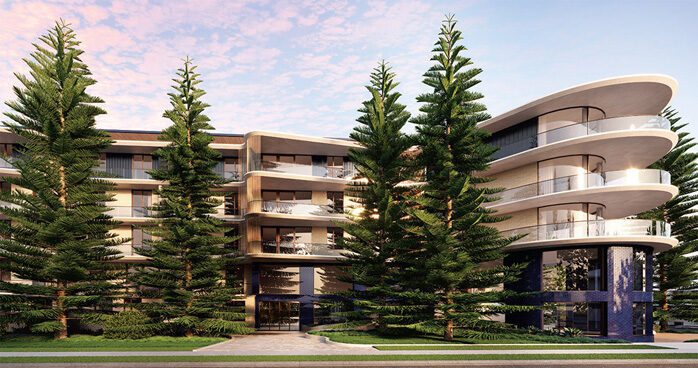

Jacqui Scruby is against the Indigo by Moran development for seniors housing, but over 300 people have registered interest in the Narrabeen build
Council’s new Director of Planning and Place, James Farrington says that the NSW target is 377,000 dwellings over a five-year period. “If you break that down, it equates to a 25-storey building being delivered somewhere in Sydney, seven days a week, 365 days a year. For the Northern Beaches, it’s the equivalent of a five-storey residential flat building every two weeks,” he says.
Premier Minns’ current low and mid-rise policy promises to deliver 112,000 dwellings over the next five years, ‘reintroducing housing choice and diversity,’ within 800 metres of 171 town centres and stations, many across metropolitan Sydney. The new law looks set to deliver many more. But at what cost?
“If the major parties wanted to streamline housing they should have supported local councils having more streamlined processes, not just allow developers to build what they want without supporting infrastructure,” argues Ms Scruby. The Pittwater MP backs two motions passed at a November 2025 council meeting to address the impact of developments such as Narrabeen’s Indigo by Moran, while others – including 81 planned apartments over three six-storey buildings on Darley Street – West, Mona Vale, raised local eyebrows.
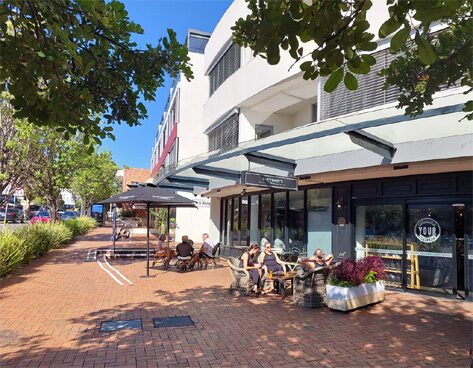

The village feel of Mona Vale could be lost amid density proposals
“Having a say in the community you live in is a core part of democracy, which has now effectively been ripped away,” Ms Scruby adds. “This is not strategic planning – it’s the opposite and potentially diabolical, risking high rise apartments popping up inappropriately and spot rezonings to support developer vision, not community vision, without requirements for green space and sporting fields.”
Council advises PL that the low and mid-rise housing policy and the Planning System Reforms Bill ‘override local planning rules, reduce council’s role and community input, and limit opportunities to deliver supporting infrastructure.’
“This creates a risk that developments proceed without adequate planning or negotiated public benefits,and does not address major infrastructure bottlenecks across the local government area, including severe road congestion, limited public transport, stormwater issues and insufficient community facilities.”
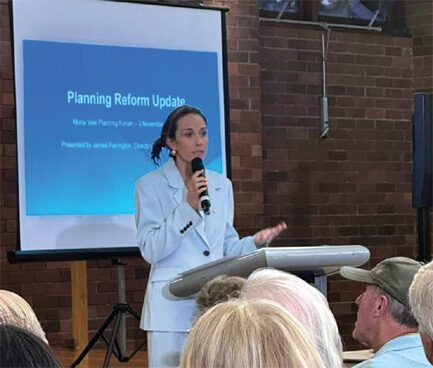

Jacqui Scruby’s forum aimed to update locals on the reforms
Council has ‘invested significant effort’ in planning for growth in areas such as Frenchs Forest and Brookvale, based on ‘detailed traffic, transport and housing studies, with strong community support.’ It has also ‘long advocated’ for an east-west rapid bus transit link connecting Dee Why and Frenchs Forest with Chatswood and beyond, as well as the Northern Beaches Tunnel.
At a November meeting, council resolved to write to the NSW Premier expressing concern that the legislation centralises planning powers and limits environmental checks, including cumulative impact assessments and independent bushfire risk advice from the NSW Rural Fire Service. Mayor Sue Heins says in an open letter to residents that, while council is ‘committed to’ delivering new homes, it ‘needs to be done in the right way that respects the character and the needs of our beautiful local area.’ “Planning should be collaborative – we’ll be keeping pressure on the state to get this right.”
In Mona Vale, the newly formed SOS (Save Our Suburb) Resident Action Group is determined to keep the suburb – a designated town centre – ‘in the hands of its community.’ “Many streets have been rezoned to allow six-storey buildings and some developments will be fast-tracked without community consultation. We are not opposed to regulated appropriate development. However, the State Government has rezoned streets in Mona Vale without a single cent spent on infrastructure. They’ve side-lined council and haven’t come near the community to listen or explain,” says the group.
While those pushing back may be written off as NIMBYs, focusing solely on housing delivery without considering the unique local environment or infrastructure needed feels dangerously misaligned with the unique Northern Beaches setting. We need housing. That is not in dispute. But it must align with 80 kilometres of pristine coastline, 114sq km of national parks, and over 75 threatened plant and animal species. We need roads and schools and transport to support that housing. As MP Scruby says, “Planning must happen with us, not to us.”


