


Research breakthroughs in joint care and heart health are set to enrich the lives of many Australians.
Osteoarthritis research
Professor David Hunter is a world-leading clinician researcher in osteoarthritis (OA) at Northern Sydney Local Health District’s Kolling Institute at Royal North Shore Hospital. Dr Hunter received an NHMRC Leadership Investigator Grant of $3 million in recognition of the Kolling Institute’s research into OA, a five year research program looking at developing new treatments and personalising treatment.
Over three-million Australians live with OA and Dr Hunter’s research aims to transform care by exploring new approaches to prevention and accelerating effective treatments. He says OA is often ignored and accepted as simply a part of getting older.
“Less than one-third of people follow guidelines such as getting active, getting strong and managing their weight if they’re above a healthy weight,” Dr Hunter tells PL.
“Those three things combined are the core treatments for osteoarthritis and a lot of people who have osteoarthritis don’t necessarily follow (these guidelines),” he says.
Dr Hunter and his research team are currently recruiting participants for trials. The Cascade Study is a group-based walking program, the Coastal Study involves multi-disciplinary care clinics where face to face, telehealth and remotely delivered care, and a digital program on the OA Coach app are compared.
The Osteoarthritis Prevention Study (TOPS) Trial is about prevention and is focused on those at risk of developing OA. It focuses on women who are over 50, above a healthy weight, and do not have OA, who will undertake a diet and exercise program over four years to assess if its onset can be prevented.
Dr Hunter explains that an ageing population, more people injuring their joints and a sedentary lifestyle means the number of people with OA is increasing.
“We’re not moving as much as were 20 to 30 years ago,” Dr Hunter says. “We’re sitting a lot more than we were but our joints are trophic organs which benefit from being stimulated by activity.
“A lot of people with arthritis feel pain and they become less active, thinking that it might help them but unfortunately it has the reverse effect.”
Dr Hunter advises people to get informed about the disease and be proactive in prevention and treatment.
“We’re trying to give people better knowledge and understanding about what they can do and inform them about what treatments are effective and available, as well as develop new treatments,” he says.
If you’re interested in finding out more about this research and trials, visit osteoarthritisresearch.com.au
Liam Potter is an exercise physiotherapist at Anglicare Warriewood Brook Seniors Living and director of Reignite Health. He advocates for remaining active as we age.
“The type and amount of exercise you do can be directly proportionate to your quality of life as you age into your 70s, 80s and 90s,” Liam tells PL.
He says many types of exercise can prevent or manage OA, including low impact resistance training, flexibility and mobility training, aqua aerobics and hydrotherapy. But he advises keeping your pain level below a 3 out of 10.
“Resistance training that causes only mild pain…can make a joint more stable,” he explains. Liam says that having more muscle bulk will result in shock absorb effects going into the muscle, rather than the joint, which results in less or no pain.
He says flexibility and mobility training can help improve range of motion of the joints and aqua aerobics is a low impact exercise that is good for people in pain or new to exercise and worried exercise may make their pain worse.
Liam says that weight management is important for protecting joints.
“Imaging wearing a 10 kilogram backpack every day – that’s going to cause more wear and tear on your joints,” he says. “Reducing weight through exercise and diet can significantly reduce osteoarthritic pain.”
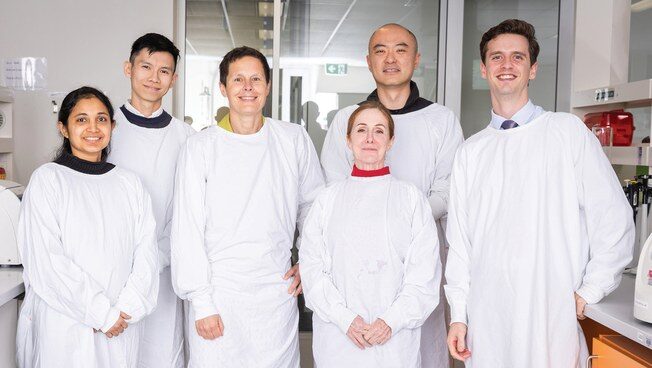

Professor Gemma Figtree (third from left) with the research team looking to detect coronary artery disease early
Heart attack prevention
By Tamara Spray
Coronary artery disease remains the leading cause of heart attack and sudden cardiac death, yet it often develops without symptoms. Now medical researchers are leading a three-year program to detect coronary artery disease long before it hits.
Professor Gemma Figtree is a cardiologist at Royal North Shore Hospital who works in the acute heart attack centre and is the lead researcher on the program which has received a $750,000 funding boost from the NSW Government. The program aims to shift the approach from reactive treatment to early detection.
“More than 50% of people who have heart attacks don’t have reported symptoms beforehand,” Dr Figtree says.
Atherosclerotic coronary plaque (plaque) can be a cause of heart attacks and can be present in people well before symptoms arise.
“Advanced CT imaging can do very good imaging of coronary disease in a way that we’ve not been able to do before,” Dr Figtree says. “What we’ve realised from patients who’ve already had heart attacks is that we can treat the active plaque by very intensive LDL (cholesterol) lowering and…target that to effectively starve the vasculature of the ingredients of the plaque. That can stop progression and cause a semi-remission of this plaque in the sense that it becomes much more stable and much less likely to cause a heart attack.
“Trying to get equitable access for people to early detection so that they can receive this effective treatment before a heart attack is what’s driving our program of research.”
The team are developing new blood-based biomarkers in the hopes of creating a simple blood test which can identify patients who are at a higher risk of heart attack, and flag them for further tests. Dr Figtree says the aim is to improve the outcomes for people who don’t have easy access to CT scans like the coronary calcium score or the CT coronary angiogram.
Every year in NSW, coronary artery disease causes around 6,000 deaths. “Given we know most people can achieve effective remission if we get the right treatment to them, heart attacks should be something that we should be able to make avoidable and almost unheard of,” Dr Figtree says.


