


A new law will revolutionise the way house planning is done in NSW, but councils say they are being pushed out of the process at great cost to communities. Catherine Lewis reports
The landmark Planning System Reforms Bill 2025, passed last November, paves the way for a ‘faster, fairer planning system,’ said Minister for Planning and Public Spaces Paul Scully at the time. It shifts the foundational legislation of NSW’s housing, jobs, infrastructure and energy delivery into a new era, clearing chokepoints that have long held up new home delivery – a promised boon for communities, councils and developers.
But many don’t agree, arguing that developer-led planning sets a lethal precedent for communities already struggling with density gone wild, citing a dearth of infrastructure to support such plans and vast cost to natural surroundings.
“Together with the mid-rise housing reforms, (this will) continue to erode public participation in planning and override local planning controls,” says North Sydney Mayor Zoë Baker.
“When communities are part of shaping plans, they can reconcile with higher density if it delivers tangible benefits like open space and community facilities.”
Streamlining is at the law’s heart. The largest housing and planning reform agenda in state history, it distils a range of regulations, such as the low- and mid-rise housing policy, and transport oriented development program, into one super- charged runway for creating homes and jobs.
It slashes ‘unnecessary’ red tape via the new Development Coordination Authority – a single ‘front door’ linking major projects across NSW Government agencies and expands complying development pathways to hustle approvals for ‘low-impact’ development, shortening consultations for state significant developments (SSD) from 28 to 14 days. A targeted assessment pathway will hasten developments already subject to consultation.
“NSW has been held back by a system that was slow, complex and out of step with the necessity to deliver more homes,” says Premier Chris Minns. “These reforms will help us build more homes faster, in the right places.” Regional planning panels will be ditched, while more than 100 consultation plans will merge into a single, state-wide community participation plan.
Above all, the new law pushes for an enduring, state-wide focus on housing delivery. And isn’t that what we need? NSW has been lagging in terms of hitting housing targets and in 2024, sat last-in-line for construction completions on the east coast, despite having the largest population, largest expected population increase and highest rents and median house prices.
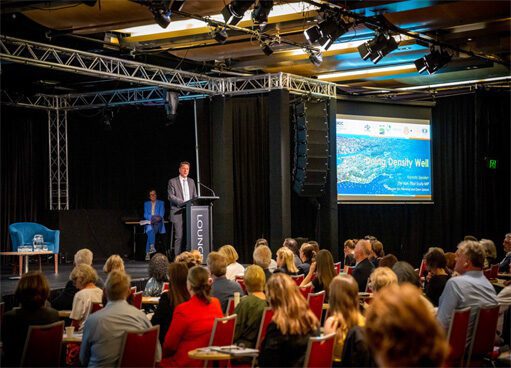
NSROC’s Doing Density Well Forum united council voices on how to futureproof planning

Mosman resident Judith Pearson is taking the State Government to court over the housing density changes
Property Council of Australia data shows that new housing starts fell from 47,567 in 2023 – the lowest in over 10 years – to just 45,552 last year. But this doesn’t sit well with National Cabinet plans to construct 1.2 million ‘well-located’ homes over the next five years, necessitating 77,000 housing starts a year from NSW.
Premier Minns’ current low- and mid-rise policy promises 112,000 homes over that stretch, ‘reintroducing choice and diversity’ within 800 metres of 171 town centres and stations, many across metropolitan Sydney. The new law looks set to deliver many more. But at what cost, say councils, arguing that it is an erosion of their role and a betrayal to past density planning suitable for specific suburbs. They say the plans are short-sighted and will reduce community voice, representation and trust, scrapping a local’s right to access local decision makers. But Minister Scully argues that the law enables a planning system ‘fit for the 21st century,’ one that supports housing and energy delivery, encourages job creation, investment and ‘builds better communities.’
Currently, there are more than 22 SSD applications within the North Sydney LGA of 10.5sq km, with North Sydney Mayor Baker telling NL that she fears the reforms will ‘concentrate power in the Minister and Planning Secretary,’ and ‘enshrine permanently the fast track process via the Housing Delivery Authority to rezoning and/or SSD applications.’
Council has also called for a review of the contributions cap on residential builds to allow for future infrastructure.
“Developers are increasingly able to bypass councils and deal directly with the State Government,” adds Mayor Baker. “It is extremely difficult for councils to secure contributions, via voluntary planning agreements, towards new open space and community facilities when developers can achieve significant uplift – without providing public benefits – by dealing directly with government.”
The details of how the new legislation will operate, including preparation of regulations and guidelines, will be the subject of detailed community consultation likely to be held in February, the mayor concluded.
Willoughby City Council Mayor Tanya Taylor agrees that ‘doing density well’ is key. In Willoughby, concerns over an SSD for 1,500 homes at the former Chatswood Metro dive site – which lacks infrastructure families ‘need to thrive’ – abound. Speaking as president of the Northern Sydney Regional Organisation of Councils (NSROC), Mayor Taylor told the Doing Density Well forum late last year that a well-planned built environment allows communities to grow, while maintaining their unique character. “We’re ready to support more housing,” the mayor tells NL. “But it must come with the infrastructure that makes our city liveable: schools, green spaces, recreational facilities, transport and places for community to connect.”

Mosman Mayor Ann Marie Kimber says that including the community in decision making is essential.
“NSW has been held back by a system that was slow, complex and out of step.”
Premier Chris Minns
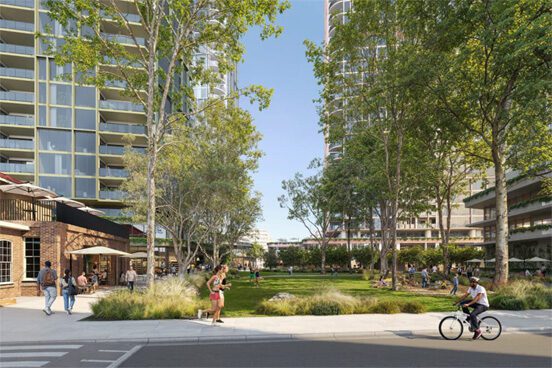
The Chatswood Metro dive site will no longer be turned into a school, but 1,500 units
Willoughby Council tells NL that it has ‘resolved to embark’ on a Reimagining Chatswood masterplan, aiming to create capacity for 6,500 additional dwellings in one of the most connected centres in Greater Sydney, with Metro, heavy rail and a major bus interchange. “This is about setting the benchmark for density done well,” confirms Mayor Taylor.
In heritage-heavy Mosman, concerns have ramped up following a 2024 letter from Minister Scully to Mosman Council outlining expectations that the suburb ‘take additional growth to alleviate the housing challenge.’
Muston Street resident, Judith Pearson, 89, launched a landmark legal challenge against the State Government in the NSW Land and Environment Court last year, arguing that developments must suit specific communities. The case has not yet had a full hearing.
Mayor Ann Marie Kimber – who told residents in an open letter that the law represents a ‘major reduction in local input and oversight of planning decisions,’ is now focusing on keeping the community in the loop.
“With the legislation now passed, Mosman’s focus will continue to be on advocacy and collaboration to help ensure genuine community consultation and local Government decision making and planning assessments that are transparent, accountable and environmentally responsible,” she tells NL.
“This includes working on an infrastructure audit to help guide requirements around future development, potential increases to developer levies (of up to 400%) to help pay for future infrastructure and an affordable housing policy,” adds the mayor.
Those pushing back on proposals may be written off as NIMBYs by YIMBYs, but focusing solely on housing delivery without thought to the unique local environment or the infrastructure needed to support rising numbers, feels dangerously misaligned with what communities truly need. Complex, creative and community-consulted sustainable growth is the key. As Mosman’s Mayor Kimber says: “Only with a collaborative and united approach can we meaningfully address the housing crisis.”